Introduction
Molly Ness, an author and former teacher, struggles to engage her students in the classroom. Ness often had to compete for students’ attention with technology and distractions such as Pokémon cards and fidget spinners. Ness constantly stays on top of her game by engaging with the material she selects, the activities she provides, and the instruction she delivers. But Ness figures out a way to engage all learners is the frequent inclusion of think aloud in her K-5 classroom instruction.
Why Think Aloud Matters
According to ReadWriteThink by the NCTE website, the intention behind Think Aloud lessons is to help students monitor their reading comprehension and employ strategies to guide understanding.
NCTE says Think Aloud requires reader to stop periodically, reflect on how a text is being processed and understood, and relate orally what reading strategies are being employed.
Students have to verbalize their thoughts as they read and bring their open strategies for understanding a text.
One of the crucial components of learning, according to NCTE, is metacognitive awareness (being able to think about one’s own thinking). It enables learners to assess their level of comprehension and adjust their strategies for greater success.
So, when we say Modeling Think-Aloud matters so much, we make the invisible visible. Students hear how a strong reader, writer, or problem solver makes choices, gets stuck, checks, and keeps going. That shift is huge.
It also fits the bigger goal most of us care about, student independence. When teachers model the process first, then deliberately release support, students stop waiting for rescue and start using their own inner voice. Some of the clearest classroom examples of this show up in RBT Modeling Moves That Build Clarity, Confidence, and Independence, and the same message runs through strong coaching on clear instruction and ownership.
What Modeling Think Aloud Looks Like in a real Classroom
Author Jeffery Wilhelm of ThinkingAloud provides one short example of how a teacher models expert strategies when beginning to read a new text, and in doing so gets her students into the game of reading:
The Great Fire
By Jim Murphy
[Teacher thinking aloud] Titles are a call to attention. So I always pay attention to titles.I’m guessingthis will be about a fire and a great one, the great one. I like the idea of learning more about disasters. It’s an important topic and we are studying about how to prepare for disasters. “The Great” is an intensifier, and I should notice it because intensifiers are another call to attention.
The title is also a direct statement because we have a definite article and a judgment. If something is called “The Great” something, then it’s being named, and I want to notice names
OK, I want to go slow now. We know that beginnings are always important and have a privileged position and give privileged information. This is a call to attention.
[Reading] It was Sunday and an unusually warm ending for October eighth, so Daniel “Peg Leg…”
[Thinking aloud] I know names are important, especially nicknames. Why this nickname? One leg? That is another call to attention: Having one leg is a rupture from the norm.
[Reading] Sullivan left his stifling
[Thinking aloud] Connects to title, heat. So this is a call to attention using repetition or connection providing a kind of through-line—that is, an idea that runs through the text, is repeated, and connects and develops other ideas.
[Reading] little house
[Thinking aloud] So he’s poor? The author must want me to notice that or he wouldn’t mention that it was little.
[Reading] on the West Side of Chicago
[Thinking aloud] Confirms this book is about the Great Chicago Fire and where it started.
[Reading] and went to visit neighbors. One of his stops was at the shingled cottage.
[Thinking aloud] Shingles are wood, and we know wood burns. This is another call to attention using repetition and connection.
[Reading] of Patrick and Catherine O’Leary.
[Thinking aloud] Sullivan and O’Leary—both Irish. This call to attention names as well as connects. I bet they are in the Irish part of town. I know that the Irish came to this country after the potato famine, and often lived together in the same parts of cities like New York, Boston, and Chicago. The way the author is repeating details that connect to the fire give me a sense that the fire is going to start where the houses are all wood and close together. I can feel myself getting nervous already!
Wilhelm wants us to notice how this short think-aloud excerpt highlights students’ transferable strategies, such as always noticing titles and going slowly in introductions. It models activating the background and setting purposes. It highlights three different kinds of rules of notice and consciously repeats particular ones, like looking for repetitions and through lines that connect details.
The Best Think-aloud sounds Honest, Simple, and Purposeful
Students benefit most when the language sounds real. Not polished. Not robotic. Real.
That means saying things like, “I’m not sure yet,” “I need to check this part,” or “This doesn’t fit, so I’m going to try again.” Skilled learners do this all day. We just do it silently. Modeling Think Aloud gives students access to that hidden work.
If students only hear certainty, they assume confusion means failure.
Short, honest language also lowers the pressure. It tells kids that smart people pause, backtrack, and repair. That message builds stamina, not dependence.
How does Think-aloud help Students become More Independent Over Time
Here’s the part people sometimes miss. Think-aloud is not about keeping students tied to the teacher. They’re about giving students a pattern they can use on their own later.
At first, the teacher holds the thinking out in the open. After enough repetition, students begin to borrow that language for themselves. Over time, borrowed talk becomes inner talk.
Students learn the questions strong learners ask themselves
Independent students don’t magically know what to ask. They learn the questions by hearing them repeatedly.
Questions like What is this task asking me to do?” “What strategy fits here?” “How do I know this makes sense?” “What should I do if I get stuck?” will become self-monitoring tools.
Students start to catch their own errors. They start to notice when meaning breaks down. They stop treating struggle like a dead end and start treating it like a signal.
Recent classroom guidance keeps coming back to the same point: keep think-alouds brief, use “I” language, and then fade support. That lines up well with the gradual release of responsibility model, where the teacher does less over time so students can do more.
Gradual release turns teacher talk into student habits
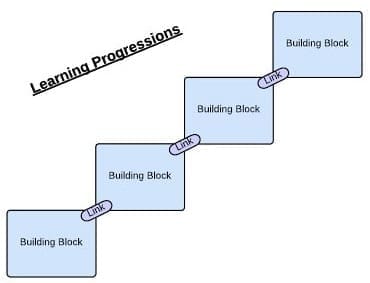
This is where “I do, we do, you do” earns its keep. First, I model the thinking. Next, students try the same move with me. Then they try it with less support.
That release cannot be random. It must be planned. If I always jump back in, students wait for me. If I disappear too fast, they guess.
The sweet spot is clear support that fades on purpose. Sentence stems help at first. Visual reminders help at first. Partner talk helps at first. Then, slowly, those supports come off. Like training wheels. Like a scaffold.
Teacher Think Aloud Works in Every Subject
Molly Ness, author of Teacher Think Aloud Works in Every Subject provides
Use think-aloud across the curriculum
To think aloud across content areas with readers in grade 4 through 8, follow these four tips:
► Align your text with the comprehension strategy that you will model. When thinking aloud, it’s most effective to focus on a few comprehension strategies. Across content area instruction, I find modeling synthesizing, asking questions, and monitoring / clarifying particularly fruitful.
► Plan in advance. Whether Seymour Simon’s Weather or Martin Luther King’s Letter from a Birmingham Jail, every think aloud requires that you peruse the text and use sticky notes to mark the “juicy stopping points” you want to remember. These are the junctures that in one way or another invite you to do something as a reader. Infer, ask a question, lean in and take notice of figurative language, and so on.
Well-executed think alouds do not emerge extemporaneously; they require thoughtful preparation, knowledge of the chosen text, and a meaningful connection between the text and the appropriate comprehension strategies. I like to use sticky notes to mark these points as I preview the text. On these sticky notes, I might go so far as to jot down a quick snapshot of what I will say to my students. Having this script to fall back on makes my think aloud more powerful.
► Provide a visual cue to indicate when you are thinking aloud. As I think aloud, I provide an explicit gesture that helps students differentiate between when I am reading from the text and when I am thinking about the text. To signal for when I’m thinking aloud, I point my index finger to my temple or use a tap on the side of my head. With this gesture, students readily get that the words I’m saying are not found in the book, but rather are in my head.
► Use I-language to jumpstart your think aloud. These “I“ statements – as in, “I wonder if the author means…” and “I’m going to reread…” are the clearest way for teachers to give a model of the reading comprehension strategies that we as proficient readers do. Through “I” language, students begin to see how to apply reading strategies to their independent reading, pursuing their own “I” thinking.
Common mistakes that can limit student independence
This is where good intentions can drift. Modeling Think Aloud is powerful, but only when it stays clear and temporary.
Talking too much can hide the key thinking move
More words do not mean more clarity. Sometimes they mean the exact opposite.
If the model runs long, students lose the thread. Trim it. Keep the language clean. Choose the two or three thoughts they most need to hear.
Don’t model longer. Model clearer.
Too many questions can replace real modeling
Teachers do this all the time, and I’ve done it too. We ask, “What should I do next?” “Why did that happen?” “What strategy should we use?” Suddenly, the so-called model becomes a quiz.
Questions have a place, but not before students hear the expert thinking. First, show. Then invite them in.
Support must fade so students can carry the thinking alone
If I always provide the prompt, the stem, the reminder, and the rescue, students learn one thing well: wait for me.
That’s why fading matters. Start with stems if needed. Then shorten them. Remove them. Move from teacher prompts to peer prompts, then to private use. Clear success criteria help here, too, because students can check their own work against the target. The Constant Contact piece on success criteria connects that idea to stronger student ownership.