

Introduction
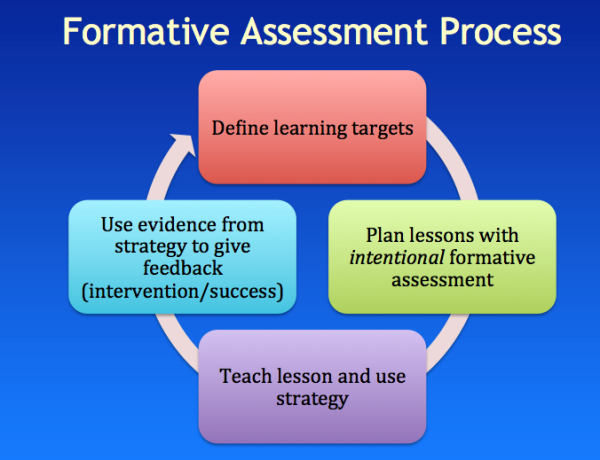
Imagine your students clearly stating what they are learning, how they will demonstrate it, and their next steps if they encounter challenges. This is the impact of clear learning targets, success criteria, evidence of learning, actionable feedback, and student ownership.
Learning targets and formative assessment are practical tools for daily classroom use. When aligned, they enhance instruction and build student confidence. (Westerberg, 2015) This post explains how to align learning targets with success criteria and evidence, highlighting how this alignment enhances actionable feedback and fosters student ownership of learning. It aims to clarify both the importance and practical application of these strategies by offering concrete steps that can be implemented within existing classroom routines, without requiring additional planning time.
What Are Aligned Learning Targets and Why Do They Matter for Formative Assessment?
A learning target is a clear statement of what students should know or be able to do by the end of a lesson. (Formative Assessment, 2025) It answers the question, “What am I learning today?” in student-friendly language.
According to Formative, formative assessment is an ongoing process in which teachers check for student understanding during lessons and then adjust their teaching methods based on the results. This process helps teachers identify whether students are grasping the material and guides their next instructional steps.”
For learning targets to really help formative assessment, they need to be aligned. That means:
- Aligned to standards or long-term goals
- Aligned to the tasks students complete
- Aligned to the questions, prompts, or checks you use to judge progress
When these elements align, you and your students work toward a shared goal. Lessons become more focused, feedback is specific and fair, and students understand what defines success.
Defining Learning Targets in Student-Friendly Language
If students do not understand the learning target, it cannot guide their learning. Using student-friendly language is essential. A simple way to phrase a learning target is with “I can” statements. For example:
- Elementary reading: “I can describe the main character using details from the story.”
- Middle school math: “I can solve two-step equations and explain each step.”
- High school science: “I can explain how energy flows in a food chain.”
These statements use clear, everyday language and focus on a single skill. Students can reference them, self-assess, and discuss them with peers.
Clear learning targets make formative assessment manageable. You can quickly determine whether students met the goal and design assessments that directly align with the intended skill or understanding. (McCafferty & Beaudry, n.d.)
What Does It Mean for Learning Targets to Be Aligned?
Alignment ensures every part of the lesson supports the same objective. A well-aligned learning sequence connects:
- The standard or unit goal (the big idea)
- The learning target for today (the small step)
- The task students do
- The formative checks you use
Here is a short example of misalignment.
- Standard: Write an opinion piece with reasons and evidence
- Learning target: “I can support my opinion with two reasons.”
- Task: Students draw a poster about their favorite animal
- Formative check: Teacher looks to see if posters are neat and colorful
In this example, the misalignment between the task and the learning target means that students are evaluated on their artistic abilities rather than their opinion writing skills. As a result, the assessment fails to capture meaningful evidence of student progress toward the intended learning outcome, potentially leading to inaccurate conclusions about their understanding and hindering targeted instructional support.
Now compare a better-aligned version:
- Same standard
- Learning target: “I can support my opinion about a school issue with two reasons.”
- Task: Students write a short paragraph about a school rule they would change, with two clear reasons
- Formative check: Teacher uses a quick checklist asking, “Did the student state an opinion? Are there at least two reasons? Are the reasons related to the opinion?”
Here, the target, task, and assessment are aligned. The evidence collected accurately reflects progress toward the standard.
Connecting Learning Targets and Success Criteria for Clear Evidence of Learning
A learning target tells students what they are learning. Success criteria describe how they will know they are successful.
Linking learning targets, success criteria, and evidence of learning transforms broad goals into observable outcomes. This approach improves formative assessment and helps students monitor their progress. (Formative Assessment | Department of Education, 2025)
From Learning Target to Success Criteria: Making Expectations Visible
Think of success criteria as a short list that answers, “What does good work look like for this target?”
Take this middle school writing target:
- Learning Target: “I can write a clear paragraph that explains a main idea with support.”
Possible success criteria might be:
- The paragraph has a clear topic sentence that states the main idea.
- The paragraph includes at least two supporting details or examples.
- Sentences are in a logical order.
- Basic spelling and punctuation are correct enough for the reader to understand.
Making expectations visible allows you to teach each criterion directly. Students can then use the criteria to guide their writing and revisions. (B. et al., 2025) Success criteria inform your formative assessment strategies. (Wiliam & Black, 1998, pp. 139-148) For example, to check if students include supporting details, you might have them highlight or label these in their writing.
Using Success Criteria to Plan Clear Evidence of Learning
Success criteria are a bridge between the learning target and your formative assessment plan. For each criterion, ask: “What would I see or hear if students met this?”
Using the paragraph example above:
- Criterion: “Clear topic sentence”
- Evidence of Learning: Ask students to underline the topic sentence, then share a few aloud.
- Criterion: “Two supporting details”
- Evidence of Learning: Have students circle their details or jot them on a sticky note.
- Criterion: “Logical order”
- Evidence of Learning: Give students sentence strips with their own sentences to reorder, or ask them to number sentences.
You can match these to simple formative strategies:
- Exit tickets
- Quick writes
- Whiteboard responses
- Peer checks using the same success criteria
The key is to ensure that evidence of learning aligns with learning targets and criteria, providing meaningful insights rather than unrelated activities or simple grades.
Gathering and Interpreting Evidence of Learning During Instruction
Aligned learning targets help you gather and interpret evidence in real time. You can use the target and success criteria to identify which students are ready and who needs support. (Meaningful Learning Goals and Success Criteria Checklist, 2025)
You do not need complex tools. Simple, low-prep methods are effective when aligned with the learning target and success criteria.
Quick Checks for Understanding That Match the Learning Target
Here are a few examples of quick checks that stay tight to the learning target:
- Target: “I can identify equivalent fractions.”
- Success criteria: Match equivalent fractions on a number line, explain why they are equal.
- Quick checks:
- Students hold up whiteboards with an equivalent fraction.
- Students explain to a partner, then one or two share out.
- Target: “I can summarize a text in my own words.”
- Success criteria: includes the main idea, the most important details, and no copying.
- Quick checks:
- Exit ticket asking for a one-sentence summary.
- Students record a brief audio or video summary on their devices.
- Target: “I can solve and explain one-variable inequalities.”
- Success criteria: Correct solution, graph on the number line, and explanation of the inequality symbol.
- Quick checks:
- Short annotated problem on a half sheet.
- Thumbs up when they can explain in their own words, then call on a few students to share.
Aligning assessment methods with the learning target provides accurate evidence of student understanding. This approach avoids measuring unrelated skills and ensures timely, relevant checks. (Rubrics and formative assessment in K-12 education: A scoping review of literature, 2022)
Sorting Evidence of Learning: Who Is Ready, Who Needs Support?
After collecting evidence, quickly sort it to determine student needs. A brief review is often sufficient; detailed spreadsheets are not required.
Some teachers use:
- Color codes: green (ready), yellow (needs a bit more), red (needs re-teaching)
- Labels: “On track,” “Almost there,” “Not yet.”
- Simple groups: ready to move on, needs a small-group check, needs one-on-one help
For example, after a quick inequality exit ticket:
- Green: Students who solved and graphed correctly, with a clear explanation
- Yellow: Students who solved correctly but misgraphed
- Red: Students who set up the inequality incorrectly
Now you can plan the next step:
- The green group works on a challenging problem or application task.
- The yellow group meets for a short practice on graphing only.
- The red group gets a re-teach on setting up the inequality and reading the problem.
This approach helps maintain an appropriate lesson pace for most students; however, it may present challenges in classrooms with a wide range of learning needs or when time constraints limit the thorough analysis of student evidence. According to research by Veugen, Gulikers, and den Brok, teachers often struggle to balance offering targeted support to students and fulfilling curriculum requirements, especially when they have large classes or limited resources.
Avoiding Common Mistakes With Evidence of Learning
Even experienced teachers can make mistakes when interpreting or using evidence of student learning. A few common ones:
- Fun but off-target tasks: The worksheet, game, or project is engaging, but it does not align with the learning target.
- Completion over understanding: Students finish the task, so it feels successful, but they still do not understand the key idea.
- Hands raised as proof: Only the confident students speak up, so it looks like “everyone gets it” when many are quiet and confused.
Keeping the learning target and success criteria visible during class helps prevent these mistakes. Before each activity, ask, “Does this help students demonstrate the learning described in the target and criteria?” If not, adjust or replace the activity.
Using Feedback That Feeds Forward to Move Learning Ahead

Feedback is powerful when it does more than label work as right or wrong. Feedback that feeds forward gives students three things:
- Where they are now
- Where do they need to go
- What to do next
Aligned learning targets and success criteria make feedback clear and actionable. Instead of general advice, you provide targeted guidance based on the evidence collected. (Westerberg, 2015)
What Makes Feedback Feed Forward Instead of Just Looking Back?
Compare these comments:
- “Good job.”
- “Try harder next time.”
These look back but do not show the student what to do next.
Now try feedback tied to the learning target and criteria:
- “Your summary includes the main idea, but it is missing key details. Add two important details from the middle of the text.”
- “You solved the inequality, but the graph is missing the open circle. Fix the circle to show that the number is not included.”
Feedback that feeds forward:
- Names the part of the Success criteria the student has met
- Names the part that is not yet met
- Suggests one clear next step
Students can use this feedback immediately, during the same lesson or unit, rather than waiting for a final grade.
Using Learning Targets and Success Criteria to Focus Feedback
A simple frame for feedback is:
“You met this part of the success criteria, and here is one move to get closer to the next part.” Examples across subjects:
- Reading: “You picked a strong quote as evidence (met). Now explain how this quote proves your idea (next step).”
- Math: “You showed all your steps (met). Now label what each step does so your reasoning is clear (next step).”
- Science: “You listed three stages of the water cycle (met). Add arrows to show how energy from the sun drives each change (next step).”
This approach ensures feedback is concise, supportive, and focused. It also encourages students to listen for and act on specific guidance.
Turning Feedback Into Action in the Classroom
Feedback impacts learning only when students apply it. (Foster, 2024) Incorporate routines that connect feedback to the learning target and evidence of learning.
For example:
- Revision time: After receiving feedback on writing, give students 10 minutes to revise one part using the success criteria.
- Error analysis: After a math quiz, students pick one missed problem, write what went wrong, and solve it again.
- Partner conferencing: Pairs use a checklist based on success criteria to give each other one “glow” and one “grow.”
- Goal setting: Students write a short goal, such as “Next time I will check that my summary has the main idea and two key details.”
When students experience this full cycle, learning targets, success criteria, evidence of learning, actionable feedback, and student ownership become daily habits rather than just classroom posters.
Building Student Ownership of Learning With Aligned Targets
Student ownership sounds big, but in simple terms, it means:
- Students understand the goal.
- Students see where they are now.
- Students know how to improve.
Aligned targets and formative assessment provide students with a clear roadmap. They shift from asking, “What are we doing?” to “How can I improve?” (Formative Assessment, 2025)
Helping Students Understand and Use the Learning Target
Integrate the learning target into the lesson rather than leaving it as an overlooked statement on the board. Read it aloud to the class, then ask, “What does this mean in your own words?”
- Have students turn and talk about why this target matters.
- Refer back to the target before and after a task: “How did this activity help us work on the target?”
Students should understand both what they are doing and why. This shift fosters greater ownership of their learning.
Involving Students in Setting Success Criteria and Checking Their Own Work
Students can help shape success criteria in age-appropriate ways. For example:
- Show two sample paragraphs, one strong and one weaker. Ask, “What makes this one stronger?” Use their ideas to build criteria.
- With younger students, co-create a simple “I can” checklist using pictures and keywords.
Once the criteria are set, students can self-assess. They might:
- Check off the criteria on a list.
- Color-code parts of their work
- Write a quick reflection: “One criterion I met, one I will work on.”
For example, a student might write, “I met the criterion about including two details, but I need to work on making my topic sentence clearer,” and then revise that sentence. This demonstrates student ownership in action.
Peer Feedback and Reflection That Strengthen Ownership
Peer feedback routines work best when tied to the learning target and success criteria.
Simple options include:
- “Glows and grows”: One strength, one area to grow, both linked to the criteria.
- “One star and one wish”: One thing the work already does well, one wish for improvement.
Reflection prompts can be quick:
- “What helped you learn most during this activity, and what would you do differently next time?”
References
(2025). Formative Assessment. Department of Education, Iowa, www.educate.iowa.gov/pk12/standards/assessment/formative. https://educate.iowa.gov/pk-12/standards/assessment/formative
Westerberg, T. R. (2015). Five Principles for Formative Assessments That Fuel Feedback. ASCD. https://www.ascd.org/el/articles/five-principles-for-formative-assessments-that-fuel-feedback
(2025). Formative Assessment. Wikipedia. https://en.wikipedia.org/wiki/Formative_assessment
McCafferty, A. S. & Beaudry, J. S. (n.d.). Clear Learning Targets: Clarity Is the Goal!. https://sk.sagepub.com/book/mono/embed/teaching-strategies-that-create-assessment-literate-learners/chpt/4-clearlearning-targets-clarity-is-goal
(2025). Formative Assessment | Department of Education. Iowa Department of Education. https://educate.iowa.gov/pk12/standards/assessment/formative
B., F. F., M., K. B. & S., W. D. (2025). The Formative 5 in Action, Grades K-12. SAGE Publications Inc. https://us.sagepub.com/enus/nam/the-formative-5-in-action-grades-k-12/book283034
William, D. & Black, P. (1998). Formative Assessment. Phi Delta Kappa 80(2), pp. 139-148. https://doi.org/10.1177/003172171009200219
(2025). Meaningful Learning Goals and Success Criteria Checklist. Kentucky Department of Education. https://www.education.ky.gov/curriculum/standards/kyacadstand/Documents/Meaningful_Learning_Goals_and_Success_Criteri a_Checklist.pdf
(2022). Rubrics and formative assessment in K-12 education: A scoping review of literature. International Journal of Educational Research 113. https://doi.org/10.1016/j.ijer.2022.101964
(2024). Secondary School Teachers’ Use of Formative Assessment Practice to Create Co-regulated Learning. Journal of Formative Design in Learning 8. https://doi.org/10.1007/s41686-024-00089-9
Westerberg, T. R. (2015). Five Principles for Formative Assessments That Fuel Feedback. Vol. 10. https://www.ascd.org/el/articles/five-principles-for-formative-assessments-that-fuel-feedback
Foster, H. (2024). The impact of formative assessment on student learning outcomes: A meta-analytical review. Academy of Educational Leadership Journal. https://doi.org/10.2139/ssrn.3690190
(2025). Formative Assessment. arXiv preprint arXiv:2509.16262. https://doi.org/10.48550/arXiv.2509.16262