David McCullough once noted that writing is thinking, but when looking at lesson design, planning is thinking made visible.
Consider a seventh-grade classroom spending three days constructing travel brochures for ancient Egypt with cardstock, gold markers, and careful lettering. The room hums with activity, yet while the standard required students to analyze how geography shaped early civilizations, nobody analyzed anything—they decorated. The lesson wasn’t lazy; it was simply built in the wrong order by putting the activity first and attaching the standard at the end.
That realization stopped me, because standards-based planning is entirely a question of build order. You don’t frame a house and then decide where the rooms go. Engagement is visible in the moment, but alignment only shows up in the evidence. There’s a difference.
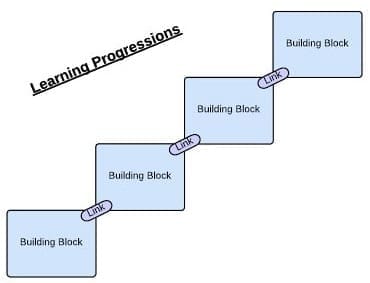
To operationalize this thinking, I use the Unpacked Standard Planner Strip—a 4-step sequence where each decision constrains the next:
STEP 1: CHOOSE PRIORITY STANDARDS & PRE-ASSESS
Not every standard carries equal weight, so I identify the central, transferable standards that form the unit’s load-bearing spine rather than treating all fourteen standards as equal. Before planning daily lessons, I run a quick pre-assessment—a short write, exit ticket, or discussion prompt—so I’m never planning in the dark.
STEP 2: DECIDE WHAT MASTERY LOOKS LIKE (UNPACK THE STANDARD)
I break broad standards into their deconstructed parts—skills, content knowledge, and criteria—and translate them into lesson-sized targets written from the student’s point of view. Dylan Wiliam’s research on formative assessment highlights that clear success criteria make feedback specific and self-assessment possible. If students can’t explain the target in plain language, the plan isn’t finished.
STEP 3: DESIGN THE ASSESSMENT BEFORE THE ACTIVITIES
Wiggins and McTighe’s Understanding by Design framework anchors this backward design, forcing me to decide how students will demonstrate mastery before building daily lessons. Here, the verb does real work: if the standard demands analysis, the assessment task must require analysis rather than stopping at simple recall.
STEP 4: PLAN INSTRUCTION & TEACH FORWARD
As Douglas Fisher (Fisher, 2020) points out, backward planning and responsive teaching operate on different timescales. Backward planning sets the destination; teaching forward sets the pace. The unit plan is a hypothesis about timing, but live instruction requires watching learner responses rather than the clock. In practice, teaching forward relies on three live questions in the moment:
• Pause & Example: Do I need to pause and provide two more examples because a concept didn’t land? • Accelerate: Can I accelerate because the class completely mastered the skill? (Those recovered minutes fund future pauses).
• Differentiate: Do I need to differentiate so part of the class moves ahead while others get targeted modeling?
Because practice builds permanence rather than perfection, catching misunderstandings in real time prevents students from reinforcing errors. The continuous evidence you gather informs three simple moves: accelerate, review, or reteach.
By avoiding the common traps of starting with the activity or confusing coverage with mastery, we ensure that units remain truly coherent. As Westerberg notes, unit coherence depends on maintaining perfect alignment between the intended, taught, and assessed curriculum so that every lesson pulls in the same intellectual direction.
Plan backward on Sunday. Teach forward on Tuesday. Standard first. Then evidence. Then instruction.
References
Fisher, M. (2020, September 21). Backward planning for teachers: A two-part method to plan backward. LinkedIn. https://www.linkedin.com/pulse/backward-planning-teachers-two-part-method-plan-backwards-fisher-ekiye/