Introduction
A seventh-grade class spends three days building travel brochures for ancient Egypt. Cardstock, borders, careful lettering, pyramids drawn in gold marker. The room hums. Every student is working.
The standard asked them to analyze how geography shaped the development of early civilizations.
Nobody analyzed anything. They decorated.
The lesson wasn’t lazy — it took real effort to plan and real effort to complete. It just got built in the wrong order. The activity came first, and the standard got attached at the end; by then, the work had already drifted somewhere the standard never asked it to go.
That’s the whole problem this guide solves. Standards-based lesson planning is a question of build order. You don’t frame a house and then decide where the rooms go. You start with the result, decide what evidence proves it, and only then plan the teaching. Get that order right, and the rest of planning gets easier. Get it wrong, and no amount of downstream effort can fix it.
What Standards-Based Planning Actually Means
The standard is the anchor, not the afterthought.
That sounds obvious until you watch how planning usually happens: a teacher finds a promising activity, builds a lesson around it, then scans the standards for one that fits. The sequence is backward, and the misalignment gets baked in before the lesson is ever taught.
Backward design flips it. McTighe (2019) lays out the three stages plainly — identify the desired result, determine what counts as acceptable evidence, then plan the learning experiences that get students there. The idea comes from Wiggins and McTighe’s Understanding by Design (2005), and its power is entirely in the ordering. Each stage constrains the next. Once you know the result, the evidence narrows. Once you know the evidence, the instruction almost designs itself.
Two things this is not. It isn’t rigidity — the order is fixed, the teaching isn’t. And it isn’t paperwork. It’s a sequence of three decisions, made in the right order.
One clarification worth making, since the vocabulary gets slippery: standards, goals, targets, and objectives are related but distinct, and Marzano (2013) notes the field has never fully agreed on how they fit together. This guide uses standards for the grade-level expectation and targets for the student-facing version. If you want that distinction unpacked properly, the guide to learning goals, standards, and targets does that work.
Step 1: Choose Priority Standards and Pre-Assess
Not every standard carries equal weight.
Some are central and transferable — they show up again in March, and again next year. Others support the main work without needing equal time. Treating them all as equal is how a unit ends up trying to teach fourteen things and landing none of them.
So start by choosing. Which standards are the spine of this unit? Those get the time, the assessment, and the reteaching.
Then find out what students already bring. A pre-assessment doesn’t need to be elaborate — a short write, three sample problems, a discussion prompt, yesterday’s exit ticket. The point is simply not to plan in the dark. If students already have part of the skill, you can move on. If a prerequisite is missing, you learn it now instead of in week three.
Step 2: Decide What Mastery Looks Like
Before you plan a single activity, answer one question: what does proficient work actually look like here?
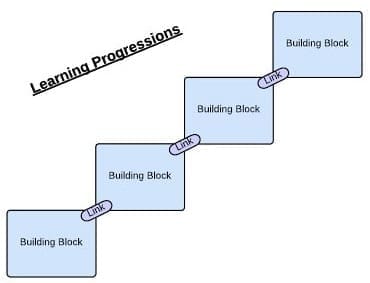
Most standards are too broad to teach in one move, so this means breaking the standard into its parts — the skills, the content knowledge, and the criteria that separate proficient work from work that isn’t there yet. Moss and Brookhart (2012) describe the student-facing version of this as lesson-sized: written from the student’s point of view, each one connecting to the next so a series of lessons builds toward the standard. The mechanics of writing those targets are their own routine, and the guide to aligning learning targets to standards walks through it step by step.
What matters here is the criteria. Wiliam (2011) puts clarifying learning intentions and success criteria at the front of effective formative assessment, and the reason is practical: criteria are what make feedback specific and self-assessment possible. Without them, “do better” is the best feedback anyone can give. With them, you can say “you identified the claim, but you haven’t supported it with evidence yet” — and the student knows exactly what to do next.
A useful test: if students can’t explain the target in plain language, the plan isn’t finished.
Step 3: Design the Assessment Before the Activities
This is the step most planning skips, and it’s the one that makes everything else concrete.
Decide how students will show mastery before you build the daily lessons. The format is open — a quiz, a lab, a discussion, a writing sample, a performance task. What isn’t open is the match. If the standard says analyze, the assessment has to require analysis. A task that stops at recall hasn’t measured the standard no matter how well students do on it.
This is where the verb does real work. Analyze means trace the change and explain how it happens. Compare means both similarities and differences, with evidence. Justify means a claim defended, not an answer stated. Match the task to the verb and the alignment holds; miss it and you’ve quietly assessed something easier than what you taught.
Designing the assessment early also clarifies the teaching. Once you know exactly what students have to produce, the question “what do they need in order to succeed at this?” answers itself — and that answer is your instruction.
Step 4: Plan Instruction, Checks, and Reteaching
Now build the route.
Daily instruction should move students toward that assessment in manageable steps: modeling, guided practice, independent work, and frequent checks along the way. The checks are what keep the plan honest. A hinge question in the middle of a lesson tells you whether to move on or stop and reteach. A two-minute conference tells you whether a student is missing the concept or just the vocabulary.
Keep feedback short and focused on the success criteria rather than the person. Plan reteaching before you need it—assume some students will need another pass, because some students always do. Differentiation built into the plan from the start supports more students without lowering the standard; differentiation bolted on afterward usually lowers it.
What Coherent Units Have in Common
A good lesson matters. A coherent unit matters more.
Westerberg (2021) frames the test simply: alignment between the curriculum you intend, the curriculum you actually teach, and the curriculum you assess. When those three drift apart, students feel it before you do. They do fine on the individual activities and then struggle on the final task, because the pieces never added up to anything.
In a well-built unit, everything students read, practice, discuss, and produce points at the same small set of priority standards. That doesn’t mean every lesson looks alike — the variety is fine, and often necessary. What has to stay intact is the intellectual thread. If the unit target is argument writing with evidence, then the mini-lessons, the mentor texts, the feedback cycles, and the final assessment all pull in that direction.
Variety is fine. Misalignment isn’t.
Two Mistakes Worth Naming
Starting with the activity. This is the Egypt brochure, and it’s the most common planning error there is — not because teachers are careless, but because a good activity is genuinely seductive. Engagement and alignment aren’t the same thing, though, and engagement is much easier to see in the moment. The room looks alive either way. The difference only shows up later, in the evidence.
Confusing coverage with mastery. Teaching a standard isn’t the same as students learning it. “We went over that” isn’t proof, and neither is finishing the chapter. Mastery needs evidence — practice, feedback, revision, another attempt. Standards-based planning helps here because it keeps the focus on what students can actually do, not what the calendar says you covered.
Start With One Unit
Standards-based lesson planning brings the work back to its center: a clear result, evidence that matches it, and instruction that responds to what the evidence shows. It doesn’t make teaching mechanical. It makes it purposeful.
The order is the whole thing. Standard first. Then evidence. Then instruction.
Try it on one unit — the next one you’d otherwise plan by opening to the next chapter. Pick the priority standard, decide what proficient work looks like, design the assessment, then build the lessons that get students there. It takes longer the first time and less time every time after, because you stop rebuilding lessons that looked engaging and missed the target.
References
Ash, Kallie. “Before You Plan the Lesson: Phased Mastery.” Before You Plan the Lesson | Phased Mastery, 9 Aug. 2026, www.phasedmastery.com/blog/before-you-plan-the-lesson.
Marzano, R. J. (2013). Targets, objectives, standards: How do they fit? *Educational Leadership, 70,* 82–83.
McTighe, J. (2019, September 1). *The fundamentals of backward planning.* ASCD. https://www.ascd.org/el/articles/the-fundamentals-of-backward-planning
Moss, C. M., & Brookhart, S. M. (2012). *Learning targets: Helping students aim for understanding in today’s lesson.* ASCD.
New York State Education Department. (2026, January 24). *Understanding standards-based lesson planning.* https://www.nysed.gov/world-languages/understanding-standards-based-lesson-planning
Westerberg, T. R. (2021, July 1). *Developing well-designed standards-based units.* ASCD. https://www.ascd.org/el/articles/developing-well-designed-standards-based-units
Wiggins, G., & McTighe, J. (2005). *Understanding by design* (2nd ed.). ASCD.
Wiliam, D. (2011). *Embedded formative assessment.* Solution Tree Press.