
Projects can energize a class and still miss the mark. Students may stay busy, make attractive products, and enjoy the process, yet finish with thin understanding and uneven work.
That is why PBL with Clarity matters. In simple terms, project-based learning asks students to learn by investigating a meaningful problem and creating a public product. Clarity means four things stay visible from day one: clear goals, a clear driving question, clear checkpoints, and clear evidence of learning.
When those pieces are in place, the project stops feeling like a maze. It becomes a map. The five-step process below keeps that map readable.
Start with the learning target, not the final product
The strongest PBL units do not start with “students will make a video” or “students will build a model.” They start with what students need to learn and transfer. The product comes later.
That approach keeps the work rigorous. It also protects against the most common PBL problem: activity without learning. Current guidance from Gold Standard PBL design elements still centers alignment, authenticity, sustained inquiry, critique, reflection, and a public product. As of April 2026, that same frame still shapes major PBL professional learning, with added attention to curiosity-led design.
If you write about your unit for a school report, grant, or journal, formal references should use APA style. However, inside your planning process, plain language is better. Your goal is not to impress a rubric bank. Your goal is to make learning visible.
Choose the must-learn standards and success criteria
Start narrow. Pick the standards that matter most, then strip away the extras. A good project usually targets a small set of content goals, a few key skills, and clear habits of work.
Then translate those into student-friendly success criteria. Students should know what quality looks like before they begin research, drafting, or group work. If the class cannot describe strong work, they cannot build it on purpose.
If students cannot say what they are learning, the project is still foggy.
Decide what students should know, do, and create by the end
These are not the same thing. Students may create a polished podcast and still misunderstand the science, history, or math inside it.
Therefore, separate outcomes into three buckets: what students should know, what they should be able to do, and what they will create to show that learning. The product is evidence, not the goal itself. That small shift changes everything.
Build a project students can actually follow
Once the learning target is clear, steps 2 and 3 come into focus. First, shape an authentic challenge and a driving question. Next, set the size of the work so the project can succeed inside real school time.
Clarity helps student independence. It also lowers the constant stream of “What are we doing?” and “Are we done?” because the road ahead is visible. Recent research backs that up. A 2026 randomized trial of PBL for middle-school financial literacy found that structured project design can support stronger learning outcomes, especially when the work is well-scaffolded.
Write a driving question that is open, clear, and worth answering
A strong driving question invites inquiry, but it does not drift. Students should understand it on the first read. It should point to the standards, not away from them.
This quick comparison helps:
| Weak driving question | Strong driving question |
|---|---|
| What is plastic pollution? | How can we reduce plastic waste at our school in ways students will actually use? |
The weak version asks for facts. The strong version asks for thinking, research, judgment, and action. It also gives students a real setting and a reason to care.
Set a realistic scope so the project does not collapse under its own weight
Teachers often overbuild PBL. The idea is exciting, so the timeline stretches, the product multiplies, and group work gets messy. Then the project sags under too many moving parts.
A clearer design is smaller and tighter. Decide the project length first. Then set group size, materials, and access to research tools. After that, mark milestone dates for research notes, claim drafts, prototypes, peer critique, and final revisions. A 2025 systematic review on PBL structural design reached a similar conclusion: structure is not the enemy of inquiry, it is what helps inquiry hold together.
Plan the learning path, feedback, and student choice
Students still need teaching during PBL. They need mini-lessons, models, rehearsal, and revision. Freedom without support is not ownership. It is confusion.
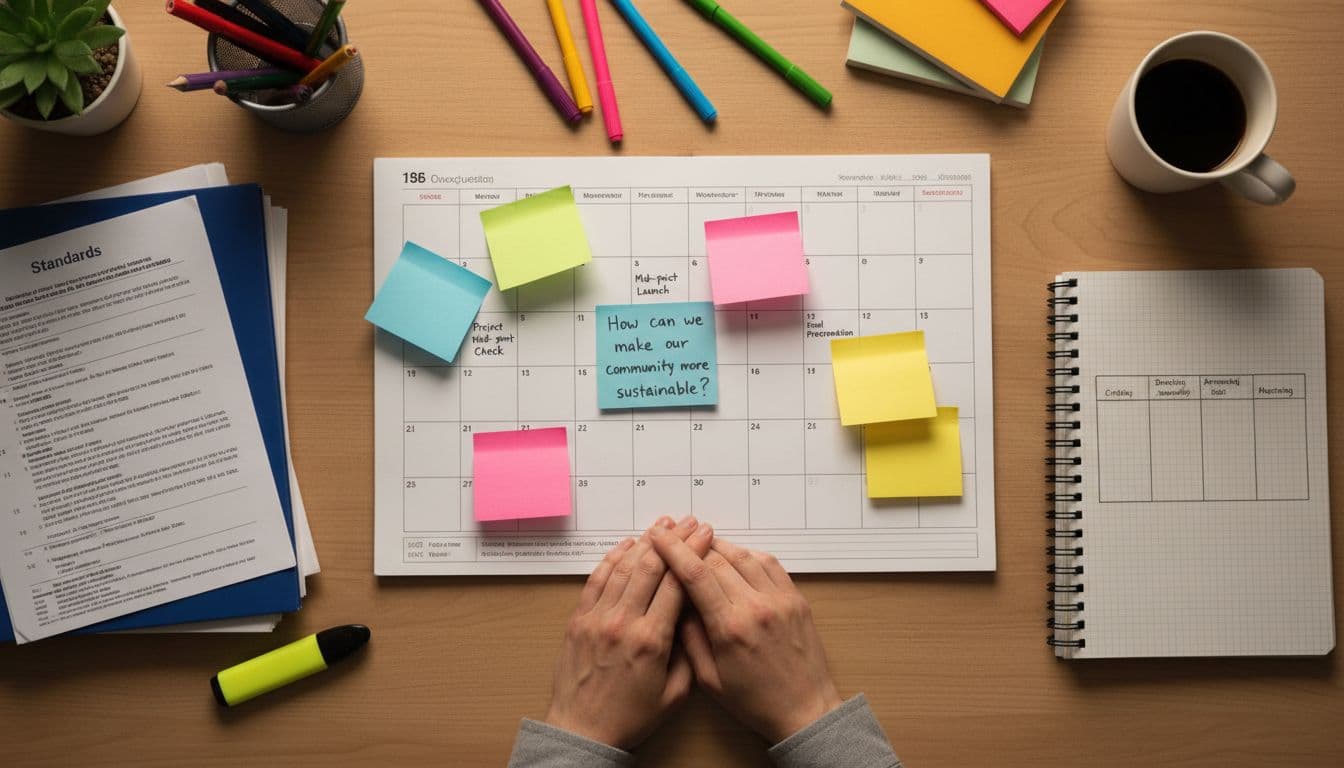
In practice, this is the core of PBL with Clarity. You are planning the learning path before launch, then leaving enough space for student thinking inside that path.
Map the inquiry, mini-lessons, and revision points before launch
Build the project in phases. For example, you might move from entry event to question building, then research, then analysis, then drafting, then revision, then public presentation.
At each phase, ask what students will need from you. One class may need a workshop on source quality. Another may need sentence frames for claims and evidence. A third may need models of strong critique. The PBLWorks guide to design thinking in PBL is useful here because it keeps iteration and redesign in the middle of the process, not tacked onto the end.
Feedback matters most during the work. It is too late if it arrives only on the final rubric.
Give students choice in ways that support learning, not chaos
Choice works best when the frame is firm. Students can often choose the issue, audience, role, product format, or method of research while still working toward common goals and shared criteria.
That balance supports ownership. It also keeps grading fair. Newer research points the same way. A 2026 Frontiers article on PBL, writing autonomy, and responsible AI use suggests that student agency grows best when inquiry is paired with explicit routines, reflection, and teacher guidance.
Too much choice too early can stall a project. Start with bounded options, then widen the lane as students gain confidence.
What clear PBL looks like in real classrooms
Examples help because PBL can sound neat on paper and messy in motion. The two projects below stay small enough to run, but strong enough to teach.
Example, a middle school environmental project with a real audience
A Grade 7 science and ELA team chooses standards on ecosystems, data interpretation, and argument writing. Their driving question is: “How can we reduce waste on our campus in ways students will support?”
Students audit trash and recycling for three days, read local data, and interview custodial staff. Checkpoints include a data chart, a one-page claim, and a draft proposal. Students choose which waste problem to study and whether to present through a slide deck, poster, or short video.
The final audience is the principal and facilities team. That public product raises the bar because students know adults will use the ideas.

Example, a high school civics or career pathway project with strong structure
A high school civics class studies local policy, argument writing, and speaking standards. Their question is: “What community change would most improve youth access to public spaces, and how should the city respond?”
Teams choose one issue, such as bus access or park safety. The teacher assigns clear roles, sets weekly milestones, and uses a common rubric for research quality, policy reasoning, and presentation. Students draft proposals, receive peer critique, and revise before a public presentation.
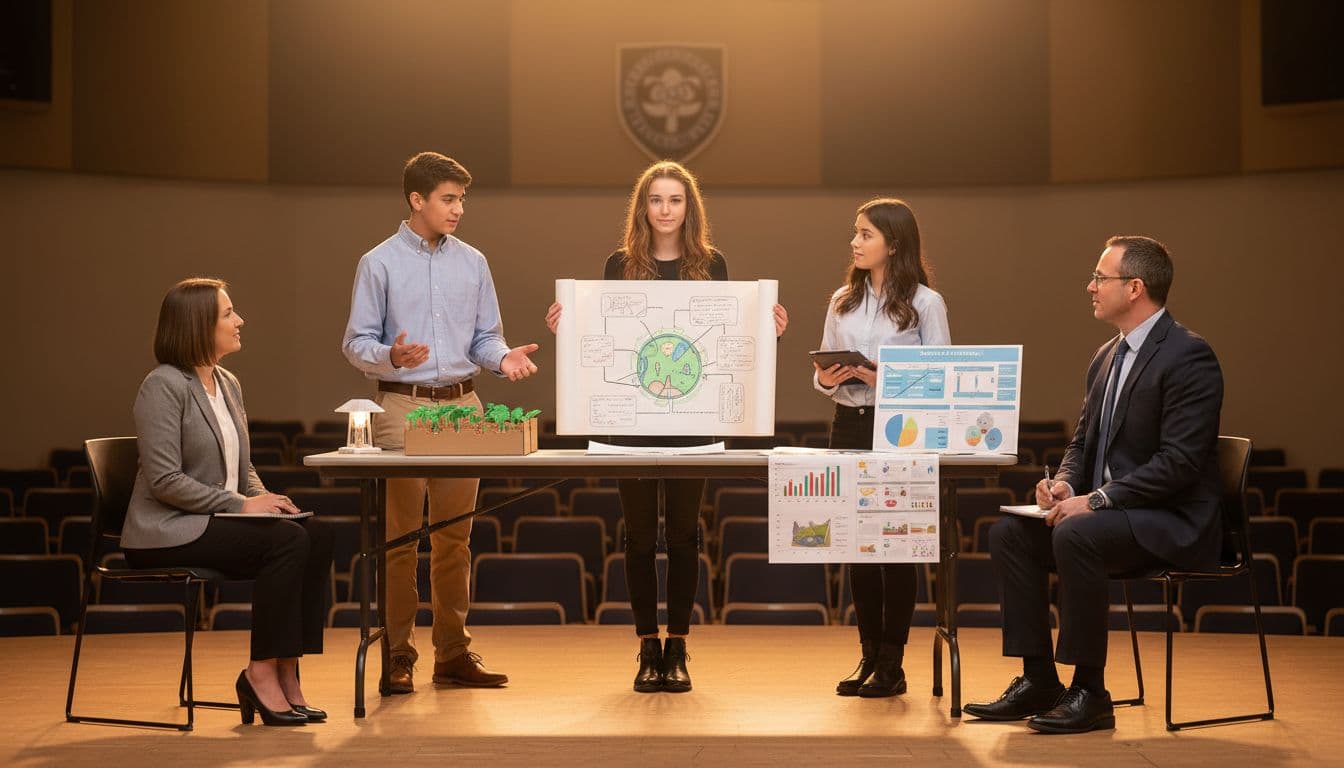
Because the structure is clear, the work stays rigorous rather than drifting into opinion-sharing.
Common PBL mistakes that blur learning
Most weak projects do not fail because PBL is flawed. They fail because the design stays vague in one key spot: alignment, authenticity, group structure, feedback, or assessment. A practical review from Edutopia on common PBL problems and solutions still matches what many schools see.
When the project is fun but the learning goal is fuzzy
This happens when the product drives the unit. Students build, decorate, record, and present, but the standards are hard to find.
The fix is plain. Revisit the outcomes. Tighten the rubric. Ask what evidence will show understanding before students touch the final product. If the evidence is weak, redesign the task.
When students have freedom but not enough structure
This problem looks familiar: vague directions, one student doing most of the work, missed deadlines, and final products that vary wildly in quality.
A few simple moves help. Use role cards or team agreements. Post milestone dates. Share exemplars. Build short check-ins into every phase. Choice still matters, but students need rails on the track if you want the train to arrive.
Clear projects lead to deeper learning
Effective PBL gets better when it gets clearer. Start with the learning target. Write a driving question that opens inquiry without losing focus. Set a scope that fits the calendar. Map the lessons, feedback, and revision points before launch. Then give students choice inside a shared structure.
That is the steady promise of PBL with Clarity. The project does not need to be bigger. It needs to be easier to follow, easier to assess, and easier for students to own.
One well-designed project is enough to change the feel of a unit. Students notice when the work is real, the goals are visible, and their thinking has somewhere solid to go.
Reference
Gold Standard PBL: Essential Project Design elements. PBLWorks. (2023, May 30). https://www.pblworks.org/blog/gold-standard-pbl-essential-project-design-elements
PBL: Driving question. The Consortium for Public Education. (2024, December 19). https://www.theconsortiumforpubliceducation.org/resource/project-based-learning-resources-pbl/driving-question/
Reyes-de-Cózar, R. S.-G. & S. (1970, January 1). Enhancing project-based learning: A framework for optimizing. Sustainability. https://ideas.repec.org/a/gam/jsusta/v17y2025i11p4978-d1666986.html
McCarthy, J. (2019, October 23). 3 common PBL problems-and solutions. Edutopia. https://www.edutopia.org/article/3-common-pbl-problems-and-solutions