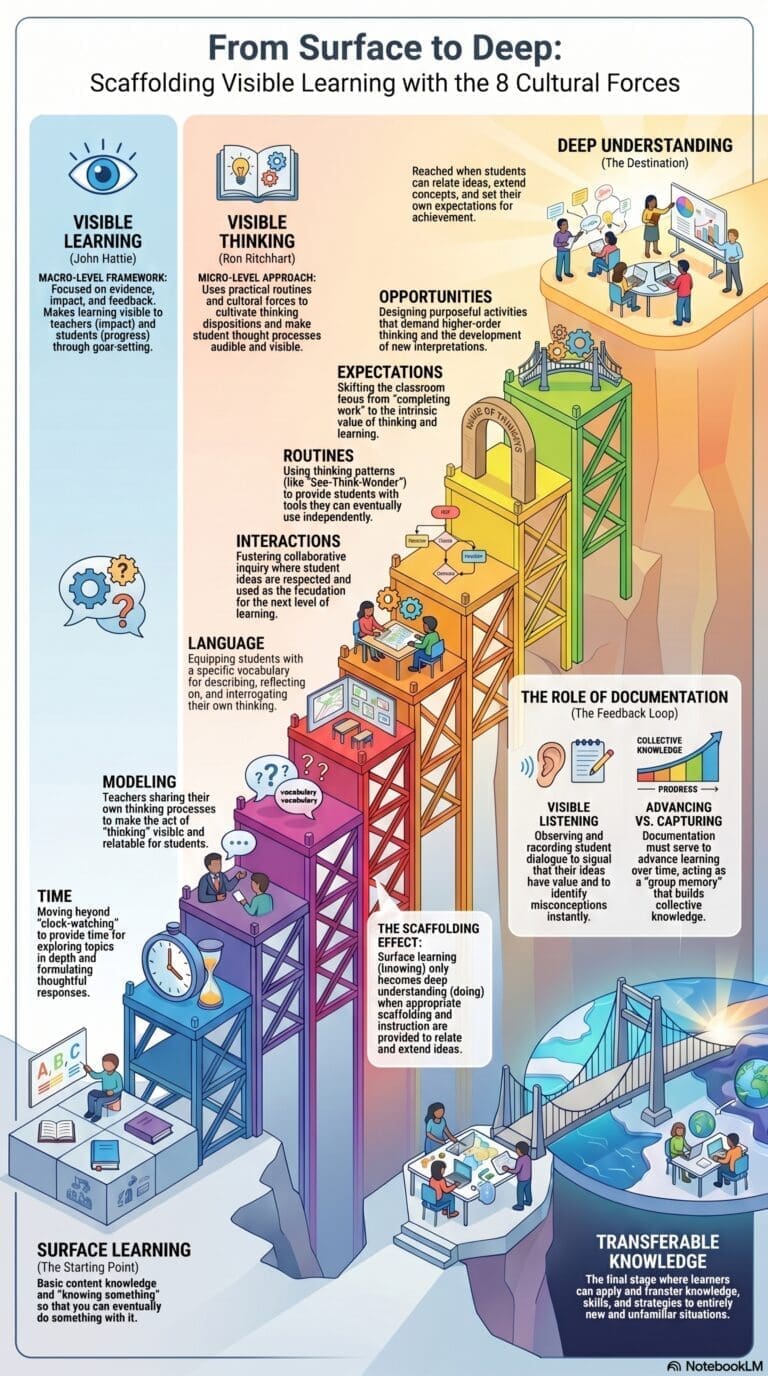
From Student Agency: Building A Culture of Thinking Through Changing Roles, anchor page, I discussed that a Culture of Thinking means the eight forces that shape classroom life: expectations, language, time, modeling, routines, interactions, opportunities, and environment (Project Zero, 2024). Put plainly, students notice what the class is really about. If the pace says “finish fast,” they learn to speed up. If the room says “explain your thinking,” they learn reasoning.
The Shift to Students Feeling Known, Valued, and Respected
The two key takeaways from Changing Roles of Teacher and Student are:
- A “good student” should not mean quiet, compliant, and passive; it should mean engaged, curious, and willing to think hard.
- Classroom authority should shift from teacher as enforcer to teacher as guide and community supporter.
As a result of the changing roles of teacher and student, a student who feels safe in class looks different. They raise a hand sooner. They try the hard problem. They come back the next day, even after a rough one.
That shift matters. When students feel known, someone notices who they are. When they feel valued, their effort and ideas matter. When they feel respected, they aren’t talked down to, overlooked, or embarrassed. Strong teacher-student relationships make learning, behavior, and attendance better because students are more willing to stay engaged and take risks (EdResearch for Action, 2025; Education Week, 2026).
The good news is that this feeling doesn’t come from one big speech. It grows through small moves teachers make all day.
Why Feeling Known, Valued, and Respected Changes the Whole Classroom
Students don’t learn well when they feel invisible. They also don’t learn well when they feel judged. A classroom can have great lessons and still feel cold.
When students, as learners, feel known, valued, and respected, they participate more, stick with harder work, and trust the room enough to think out loud. That idea is clear in KnowAtom’s explanation of this mindset, which ties strong learning to a culture in which every student matters to the adults and peers around them. The same theme runs through Cultures of Thinking’s principle of feeling known, which treats belonging as part of learning rather than an add-on (Vigeant, F., 2025a, May 14).
Mindset #4 Feeling Known, Valued, and Respected (n.d.).
What students notice first in a teacher
Students read a room fast. Before the lesson even starts, they notice tone, pace, eye contact, and whether their name is said with care. They notice if a teacher looks past them or pauses for them.
Those signals are small, but they aren’t minor. A rushed “sit down” lands differently than “good morning, Maya.” A flat correction feels different than curious follow-up. Students decide early if a class feels welcoming or if it feels like a place where they should keep their heads down.
How trust supports stronger learning
Trust changes the quality of student thinking. Without it, students protect themselves. With it, they ask questions, revise their work, and admit confusion.
Students take academic risks when they don’t think one wrong answer will cost them status.
That’s why belonging affects the whole room, not only one child. A class with trust has better discussion, fewer power struggles, and more honest effort. Edutopia makes a similar point in its piece on making students feel welcome every day, noting that students decide quickly where they matter and where they don’t (Edutopia, n.d.-a).
Simple ways to make each student feel known
Feeling known doesn’t require an extra hour in the day. It comes from habits teachers repeat until students stop wondering whether they belong.
Use names, greetings, and quick check-ins every day
Start at the door. Greet students by name. Say it correctly. If you mess it up, fix it and keep trying. That effort counts.
A quick follow-up question can do more than a long speech. “How’d the game go?” “Did your sister feel better?” “You still working on that sketchbook?” These moments tell students you remember them beyond the seating chart.

This isn’t fluff. Relationship-building supports attendance and engagement over time (Education Week, 2026). Even in busy classrooms, a two-second greeting is doable.
Listen for what students care about, not just what they answer
Students know the difference between being managed and being heard. Active listening is simple, but it takes discipline. Pause long enough for a student to finish. Don’t rush in to rescue every silence. Let them think.
Then remember what they said. If a student mentioned a job, a grandparent, a favorite team, or nerves about speaking up, bring it back later. That kind of memory tells them, “You weren’t background noise.”
Teachers sometimes think connection requires long one-on-one talks. Usually, it doesn’t. It looks more like steady attention. It looks like noticing a pattern, asking one real question, and following up next week. That’s how students start to feel known in a way they can trust.
Ways to help students feel valued and respected during learning
Knowing students is the start. The next step is showing, during actual instruction, that their presence and thinking matter.
Show respect for student thinking, even when the answer is not complete
Not every student answer is correct. That doesn’t mean it should be dismissed. A partial answer often contains the beginning of a strong idea.
Instead of moving straight to correction, try curiosity. “Say more about that.” “What made you think that?” “I see one useful piece there, who can build on it?” Those responses protect dignity while keeping the learning sharp.
That balance matters because students don’t stop participating when work gets hard. They stop when the room feels unsafe. Respect for student thinking tells them they can be wrong without being reduced to the wrong answer. Edutopia’s article on classroom belonging makes this point well: students are more open to academic risk when they feel they belong (Edutopia, n.d.-b).
Give feedback that builds dignity and keeps high standards
Respect isn’t low expectations with a nice voice. Students feel valued when teachers challenge them because they believe they can do more.
Specific praise helps. “Your evidence got stronger in the second paragraph” is better than “good job.” Private correction helps too. Public embarrassment sticks longer than the lesson. When redirection is needed, keep it brief, calm, and targeted to the behavior or task.
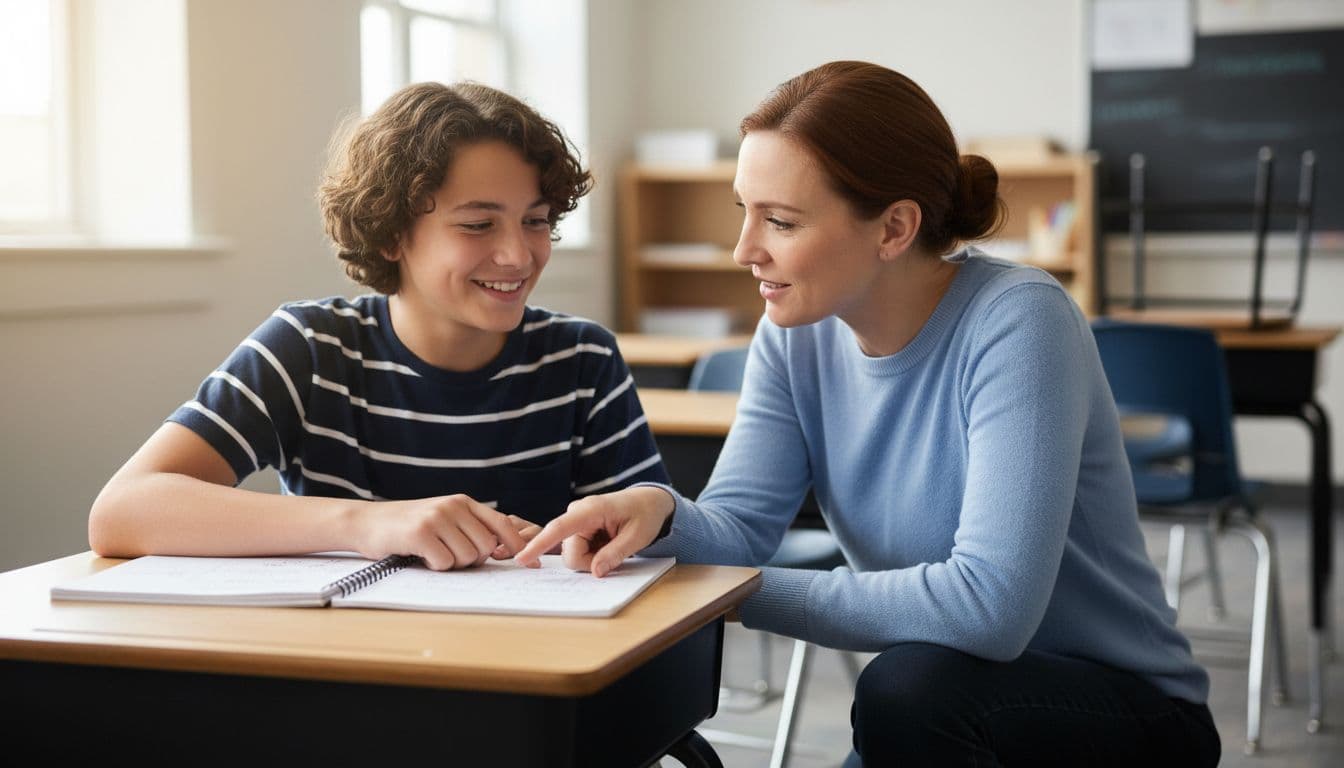
Students should feel pushed, but not exposed. That’s the sweet spot. High standards plus humane feedback tell students, “I’m not letting you off the hook, and I’m not giving up on you.”
Avoid habits that make students shut down
Some classroom habits break trust fast. Teachers don’t need perfection, but they do need awareness.
- Sarcasm can get a laugh, but it often teaches students to stay quiet. Use plain, respectful correction instead.
- Public shaming may win compliance for a minute. Private conversation protects dignity and works better long-term.
- Unfair comparisons, especially sibling-style comparisons between classmates, tell students their worth is relative. Compare students to their own past work.
- Ignoring a student’s contribution, then praising the same idea from someone else, can sting. Circle back and name the first contribution clearly.
Respect shows up in these choices. Students remember them.
Build a classroom where students feel they belong to a real community
A student can like a teacher and still feel alone in class. Belonging gets stronger when students connect with each other too.
Use group work to help students learn from one another
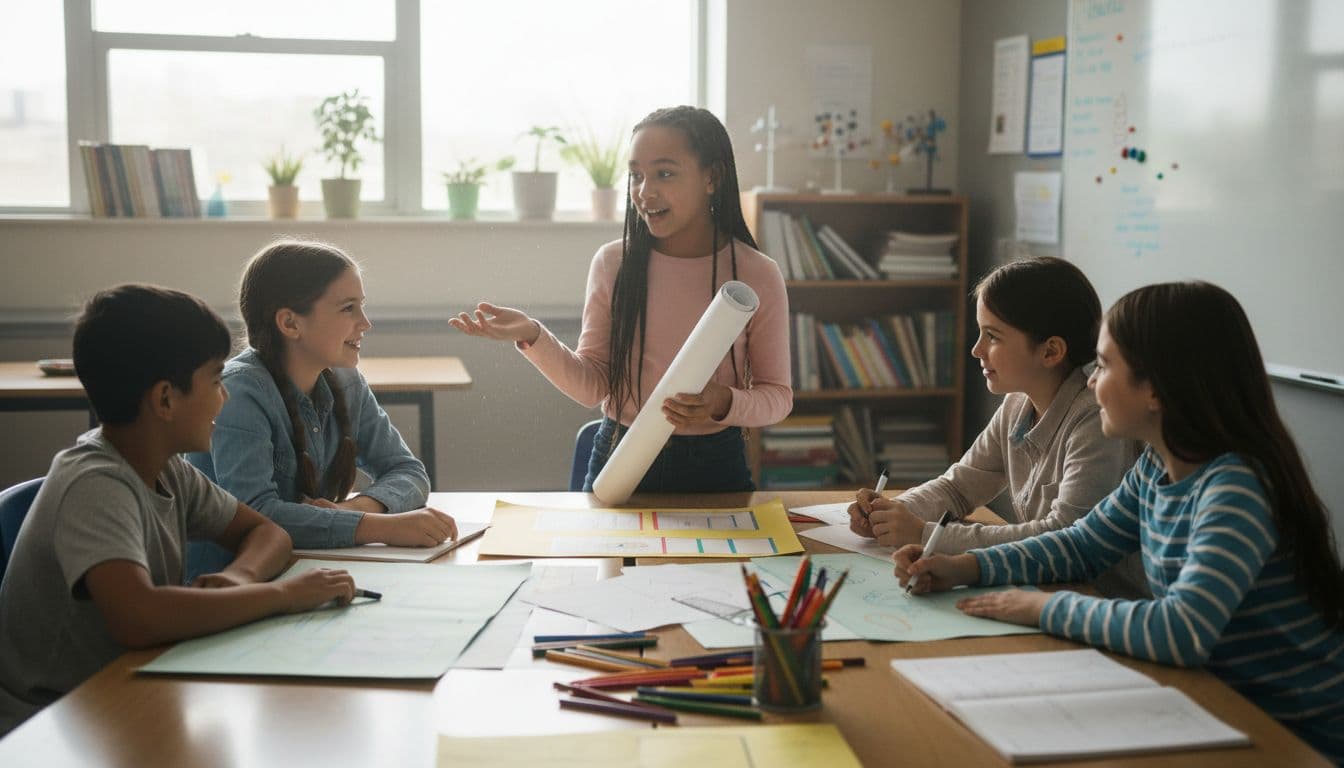
Good group work is more than putting desks together. It gives students a reason to rely on one another’s strengths. One student organizes. Another notices details. Another explains clearly. Another asks the question everyone else was afraid to ask.
That matters because learning shouldn’t feel like a solo survival test. Classroom strategies that promote community often start with simple routines like partner talk, introductions, and shared tasks that lower the social risk of speaking up (Edutopia, n.d.-c).
Make room for every voice in the room
Some students will always jump in first. Others need more space, more wait time, or a lower-stakes way to enter the conversation.
Build norms that protect every voice. Use turn-and-talk before whole-class discussion. Offer written thinking time. Call on students fairly, not only the quickest volunteers. Ask open questions that allow more than one strong response.
This is also where respect meets culture and identity. Students from different backgrounds should hear their ideas treated seriously, not as side notes. Edutopia’s guidance on students’ sense of belonging points to classroom structures that help students see and hear one another early and often (Edutopia, n.d.-d). A real community doesn’t happen by accident. It gets built on purpose.
Keep the feeling going with small routines that add up
Students need repeated proof that care is real. One warm interaction won’t carry a whole year.
Make support visible in daily routines
Simple routines help. A morning meeting. A one-question check-in. Reflection at the end of class. Regular use of names. These practices make support visible, which is part of what helps students feel steady and safe.
Notice growth and celebrate effort over time
Students also need to hear that progress counts. Point out persistence, revision, better focus, stronger discussion, or improved self-control. Some recognition can be public. Some should stay private. Both matter.
The point isn’t constant praise. It’s accurate notice. When teachers name growth, students begin to see themselves as capable learners, and that identity sticks longer than any sticker or prize (EdResearch for Action, 2025).
Conclusion
Students do better when school feels human. They learn more, participate more, and hold on longer when teachers help them feel known, valued, and respected.
That doesn’t start with a grand plan. It starts with a greeting, a remembered detail, a fair response, or feedback that protects dignity while keeping expectations high.
Pick one habit and make it consistent. Small actions, repeated often, are what students remember.
References
Contreras, J. O., Isimbi, M. K., Jia, T., & Wilson, D. (2024). Places of agency: How where we learn supports student empowerment, choice, and freedom. Places of Agency: How Where We Learn Supports Student Empowerment, Choice, and Freedom | Project Zero. https://pz.harvard.edu/resources/places-agency-how-where-we-learn-supports-student-empowerment-choice-and-freedom
Vigeant, F. (2025, May 14). Students learn best when known, valued, & respected by all – mindset 4. Students Learn Best When Known, Valued, & Respected by All – Mindset 4. https://www.knowatom.com/teaching-phenomena/students-learn-best-when-known-valued-respected-by-all-mindset-4
Mindset # 4: Feeling Known, valued, and respected. Cultures of Thinking in Action. (n.d.). https://www.cultures-of-thinking.org/4-feeling-known
Vigeant, F. (2025a, May 14). Students learn best when known, valued, & respected by all – mindset 4. Students Learn Best When Known, Valued, & Respected by All – Mindset 4. https://www.knowatom.com/teaching-phenomena/students-learn-best-when-known-valued-respected-by-all-mindset-4
Wilson, D. (2025). Learning where we belong. Learning Where We Belong | Project Zero. https://pz.harvard.edu/resources/learning-where-we-belong
Dunlea, M. (2019, September 4). Every student matters: Cultivating belonging in the classroom. Edutopia. https://www.edutopia.org/article/every-student-matters-cultivating-belonging-classroom
Kervan, L. (2025, November 14). Maintaining a tight-knit classroom throughout the school year. Edutopia. https://www.edutopia.org/article/classroom-strategies-to-promote-community/
Collier, K. (2023, August 31). How to build a strong foundation for the Year. Edutopia. https://www.edutopia.org/article/fostering-students-sense-belonging/