Sense of Belonging shapes how students enter a room, read a task, and handle a hard day. When students feel seen, safe, valued, respected, and connected, learning gets easier to access. Attendance improves, behavior often settles, and students take more academic risks because the room feels less like a stage and more like a community.
Recent reporting and campus guidance point to the same pattern: teacher empathy, fairness, warmth, and connection matter more than many schools admit. Education Week’s recent reporting on belonging highlights it as a live school issue, while the Wellbeing in the Classroom Toolkit links instructor warmth and organization to student motivation and belonging (Prothero, 2026; UBC Wellbeing, 2017).
The good news is that classroom belonging does not depend on one big initiative. It grows through practical moves teachers can use right away.
Start with everyday moves that help students feel known
Belonging usually grows through small moments that repeat. Students notice who greets them, who remembers yesterday’s comment, and who circles back after a rough morning. Over time, those moments become evidence: “I matter here.”
Greet, notice, and check in with students on purpose
A personal greeting at the door is simple, but it carries weight. Use names. Make eye contact. If a student hates public attention, keep it low-key. The point is not performance. The point is recognition.

Short check-ins help too. A quick mood scale, a sticky note, or a one-word entry routine can tell you who needs extra care. Then follow up, briefly and sincerely. Students feel supported when you notice effort, not only outcomes. “You stayed with that problem” often lands better than “Good job.”
Name recognition matters more than many adults assume. A 2025 brief report on classroom belonging and knowing students’ names found that students’ perception that an instructor knows their name predicts classroom belonging, with added concern for underrepresented students (Discover Education, 2025). In other words, these moves are not soft extras. They help students feel seen instead of managed.
Use the Cultures of Thinking mindset of feeling known
Ron Ritchhart’s Cultures of Thinking in Action gives this idea a useful frame. Mindset #4, Feeling Known, asks teachers to know students as thinkers and learners, not only as names on a roster (Cultures of Thinking in Action, n.d.).
That changes instruction. You learn who loves drawing, who thinks out loud, who needs wait time, who connects everything to sports, music, gaming, or family stories. Then you reflect that knowledge back in examples, prompts, and feedback. Students can tell when a lesson has room for how they think.
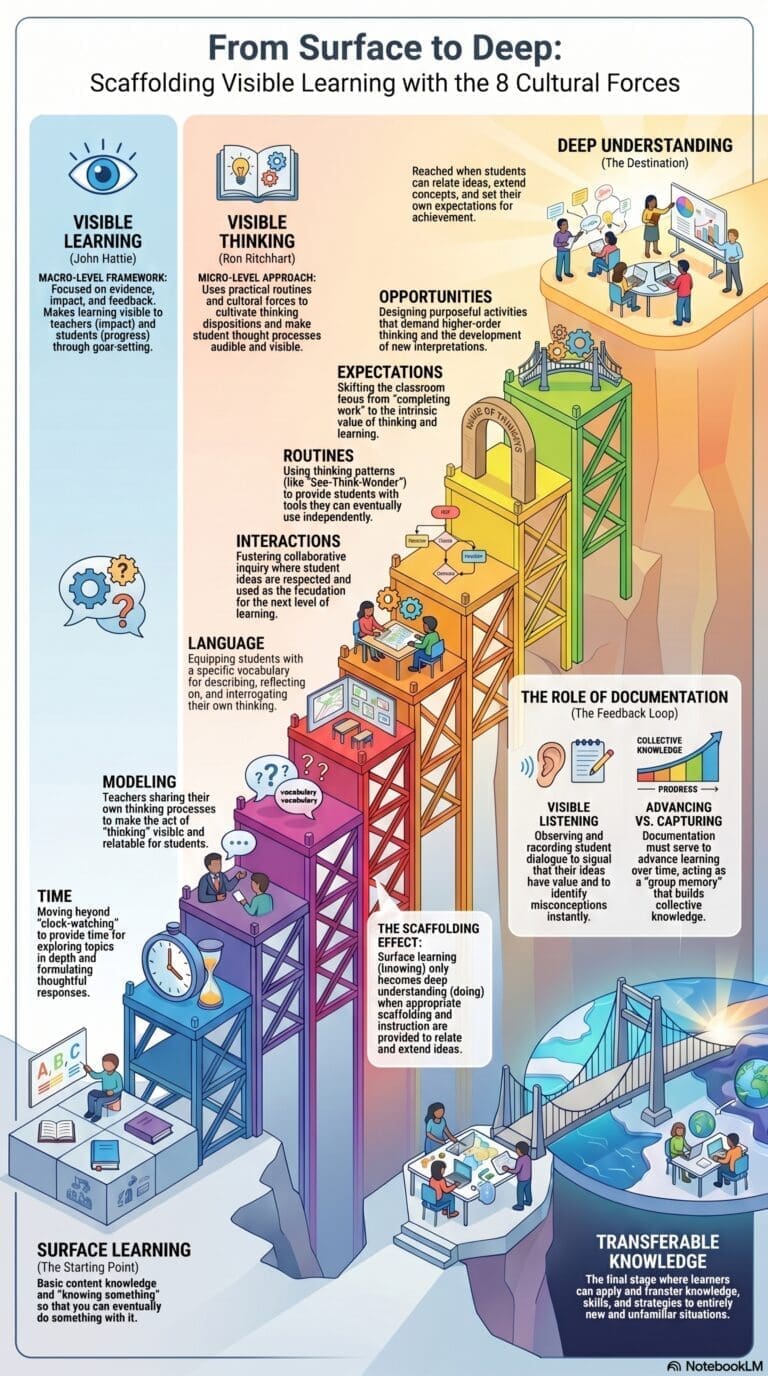
The wider Cultures of Thinking framework includes eight cultural forces, such as routines, language, interactions, and environment. For belonging, the key move is practical: make your knowledge of students visible. Reference their strengths. Build from their interests. Treat their ideas as material for learning. That is how trust grows in plain sight.
Build classroom routines that show every student they belong
Individual relationships matter, but classroom systems matter too. Predictable, inclusive routines lower social risk. Students can join in because they know what will happen, how to participate, and how others will respond.
Create discussion routines where every voice has a place
Whole-class discussion often rewards the fastest talkers. That can make belonging feel selective. Better routines widen the entry points.
Use silent writing before sharing. Follow with turn-and-talk or think-pair-share. Offer sentence stems when the topic is tense or complex. Rotate who reports out, and give students options, such as speaking, writing, or posting a short response. Fair participation does not mean equal airtime in every minute. It means every student has a real path into the conversation.
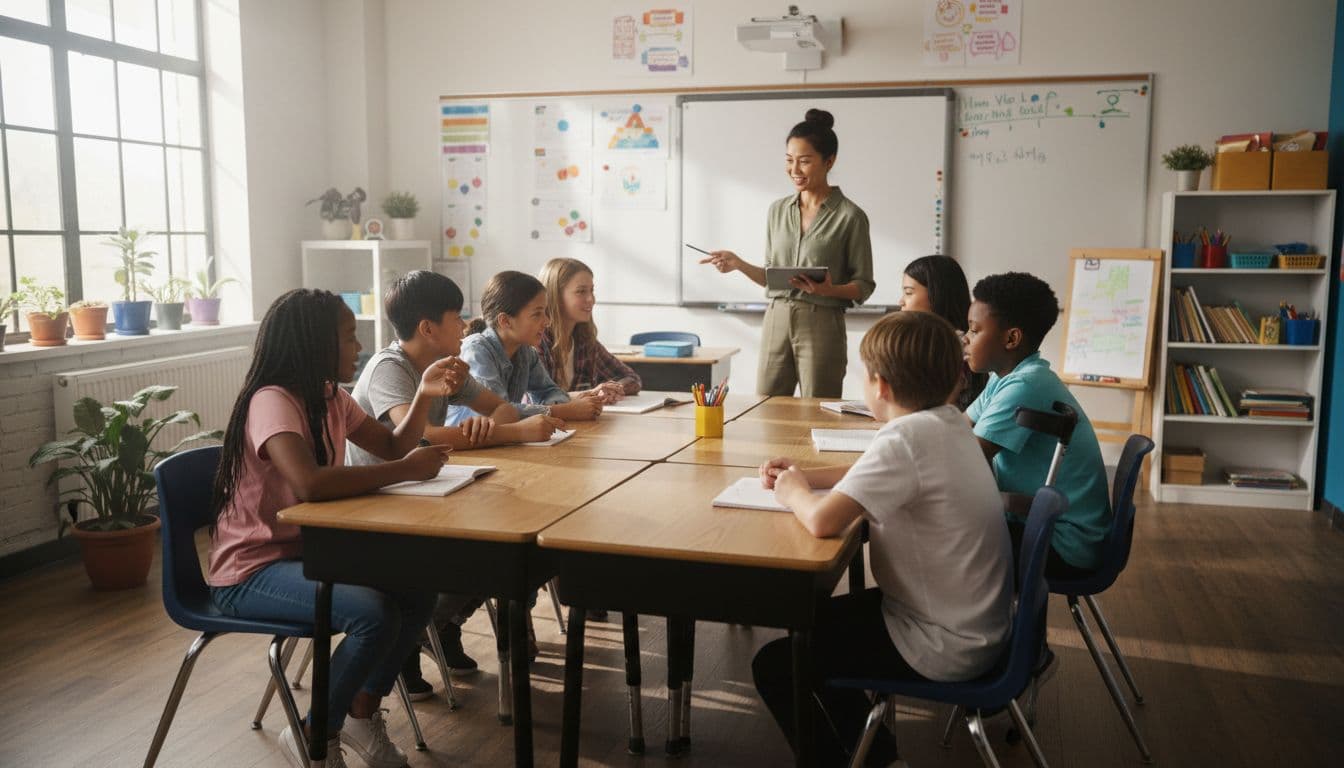
These structures reduce the fear of getting it wrong in public. They also help quieter students prepare their thinking before they speak. Columbia’s classroom belonging guidance makes a similar point: low-stakes participation routines help students engage more fully in learning. Recognition and relevance both grow when students hear their own ideas enter the room.
Co-create norms so respect feels real, not posted on a wall
Posted rules do not create belonging by themselves. Students trust norms more when they help shape them.
Start by asking what helps people learn, speak honestly, and recover from mistakes. Then turn student language into short, usable norms. “Listen fully.” “Disagree with care.” “Make room for every learner.” “Assume everyone can grow.” Those statements are clear because they sound like real class talk, not hallway posters.
This process builds ownership. It also makes respect more concrete. Students are more likely to feel they belong when expectations reflect being valued and respected, rather than simple compliance. Revisit the norms after conflict, after a new unit, or after a class slump. A shared routine only works when students see that it still belongs to them.
Make learning more relevant so students can see themselves in the room
Relationships open the door, but instruction keeps it open. Students engage more when the work connects to who they are, what they care about, and how they learn.
Offer choice, voice, and leadership in everyday learning
Agency supports belonging because students feel they have a place in the work, not only around it. Small choices are often enough. Let students choose a topic, text, example, partner, role, product, or reflection format. Offer two good paths rather than one fixed route.
Choice matters even more for students who often feel overlooked. A student who rarely speaks in discussion may shine as a visual explainer. Another may lead a small group better than they write an essay. When teachers share power in ordinary ways, students read the message clearly: your way of learning counts here.
A 2026 review in Educational Psychology Review connects interest, self-efficacy, and belonging in classroom learning, which fits what many teachers see every day. Students lean in when learning feels relevant and within reach (Educational Psychology Review, 2026).
Reflect students’ identities, strengths, and communities in the curriculum
Students scan the room for mirrors and windows. They notice whose stories get taught, whose language patterns are welcomed, and whose communities appear only as side notes. Curriculum choices send a strong social message.

Use texts, examples, and displays that reflect the actual students in front of you. Invite family and community knowledge into assignments. Frame strengths in asset-based language. A multilingual student is not “behind” because they use more than one language. A student who questions a prompt may be showing strong analysis, not disrespect.
Tokenism weakens trust, so depth matters more than decoration. One heritage month poster will not do much. Students feel belonging when they see familiarity, recognition, and relevance built into daily learning, not saved for special occasions.
Notice who still feels on the edge, and respond with care
Even strong classrooms have students who hover at the edge. Belonging work gets sharper when teachers look for who is not yet connecting.
Watch for quiet signs that a student does not feel included
The signs are often subtle. A student stops volunteering. Another misses more days. Someone drifts to the edge of partner work or changes behavior fast. These moments can look like defiance, disinterest, or laziness. Often they are communication.
View behavior as unmet need before you label it as refusal. Recent reporting on school culture and belonging also points to the cost of leaving these signals unaddressed (Education Week, 2026). Students who feel disconnected often protect themselves by pulling back.
Patterns matter more than single moments. Track who speaks, who gets called on, who is absent, and who never seems chosen by peers. That kind of notice is part of care.
Use quick feedback loops to keep improving classroom belonging
Teachers do not have to guess. Ask students.
A two-question exit ticket can help: “Do you feel known here?” and “When do you feel most included?” Short belonging surveys, one-on-one conferences, and quick reflection prompts can reveal what routines work and where students still feel invisible. Then adjust. Change groups. Add wait time. Rework norms. Offer more ways to contribute.
Belonging is not a finish line. It is an ongoing classroom practice, shaped by relationships, routines, and instruction that stay responsive.
Students do better when belonging is built into the ordinary day. The strongest moves are rarely flashy. They are steady, human, and visible in how you greet students, run discussions, share power, and design learning.
Start with one or two changes and keep them going long enough for students to trust them. That is how a classroom becomes a place where students expect care, not by luck, but by design. Good teaching already carries this work inside it, and students know the difference (Education Week, 2026).
Reference
Prothero, A. (2026a, February 24). 3 driving questions to create a sense of belonging in schools. Education Week. https://www.edweek.org/leadership/3-driving-questions-to-create-a-sense-of-belonging-in-schools/2026/02
Wellbeing in the classroom toolkit. UBC Wellbeing. (2017). https://wellbeing.ubc.ca/wct
Romney, C. E., & Fraser, A. M. (2025, November 11). Student perceptions that their instructor knows their name predict college classroom belonging: Additional concerns for underrepresented students – Discover Education. SpringerLink. https://link.springer.com/article/10.1007/s44217-025-00878-9
Richhart, R. (n.d.). #4 feeling known. Cultures of Thinking in Action. https://www.cultures-of-thinking.org/4-feeling-known
Columbia Center for Teaching and Learning. (2025). Fostering Belonging in the Classroom: Strategies for Instructors. Columbia University. https://ctl.columbia.edu/resources-and-technology/resources/belonging-in-classroom
Renninger, K. A., Barton, L. K., Bautista, G., Garcia-Barrios, M., Ogunyinka, I., & Riley, K. R. (February 9, 2026). Interest, self-efficacy, and belonging in Classroom Learning – Educational Psychology Review. SpringerLink. https://link.springer.com/article/10.1007/s10648-025-10102-7